Skip to content
Browserbase
    • Primitives
      • BrowsersCloud browsers for your agent to use the web
      • AgentsScale fully managed browser agents with simple prompts
      • SearchFind relevant websites from a single query
      • FetchRetrieve web data as agent-ready HTML, JSON, or markdown
      • RuntimeScalable, sandboxed environments for agent deployments
      • IdentityAuthenticate your agent to navigate the web like a human
      • ModelsUse any model with a single API key
      • ObservabilityUnified debugging your agent across replays, logs, and prompts
    • Open Source
      • Browse CLIGive your agent browsing skills with a single command
      • StagehandThe most popular AI browser automation framework
    • Use Cases
      • Browser Agents
      • Automated Testing
      • Workflow Automation
      • Web Data Extraction
      All use cases
    • Industries
      • AI & Agent Platforms
      • Healthcare
      • Fintech
      • GTM
      • Legal
    • Resources
      • Blog
      • Customers
      • Enterprise
      • Templates
  • Pricing
  • Docs
  • Log in
Log in
Sign up
Get a demo

AI deep research, on real browsers

The sources a research agent needs were not built for agents. Browserbase gives deep research agents a full browser stack so they can read primary sources, log into gated portals, and run hundreds of research threads in parallel, under one API key. Running on infrastructure that handles 35m+ browser sessions a month.
Get a Demo
AI agent blocked from accessing the web through APIs alone

The Problem

Why most AI research agents hit a wall

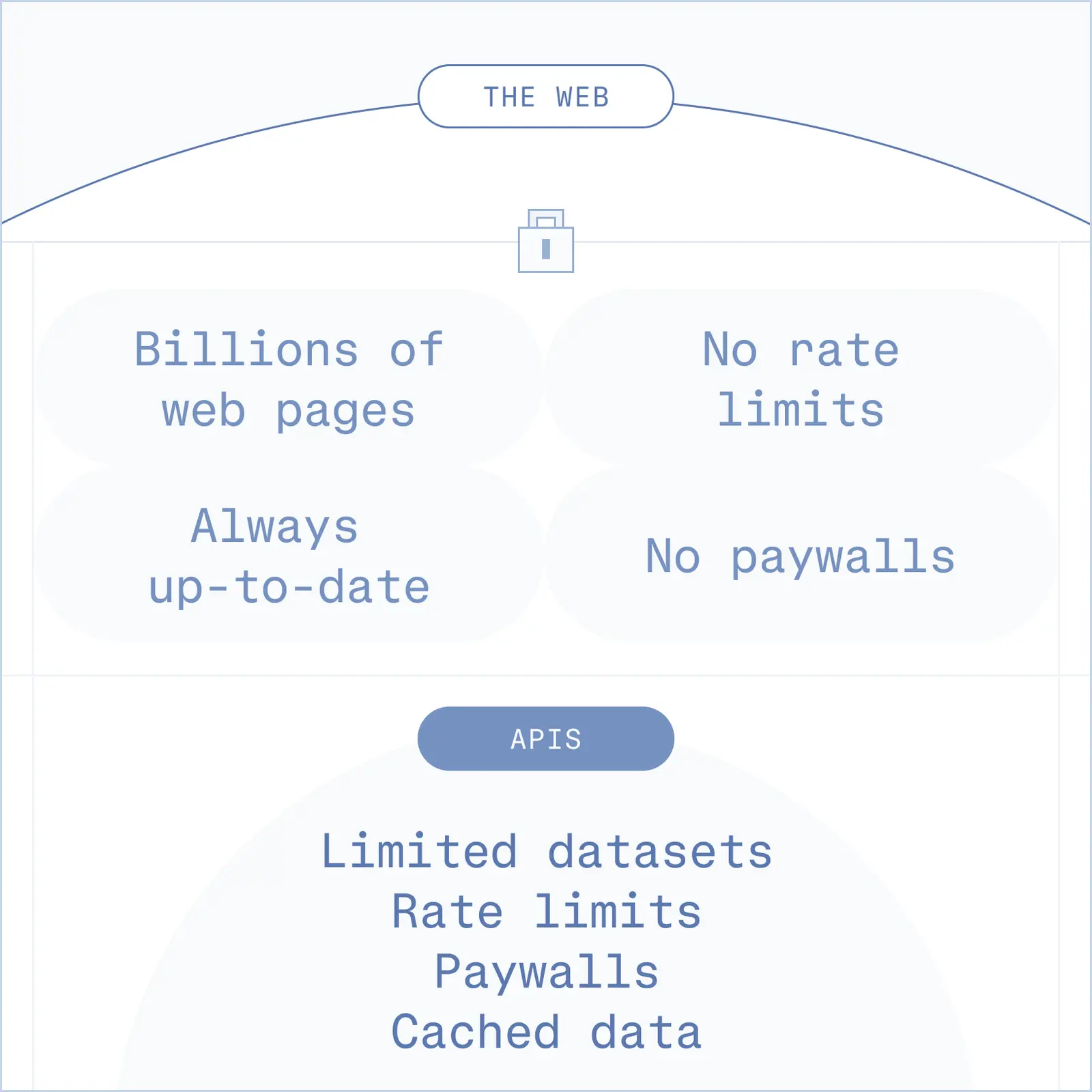
  • APIs only expose a slice of the web, and the important sources are usually not among them.
  • Paywalls, logins, and JavaScript-heavy sites break simple HTTP fetches.
  • Anti-bot systems flag headless browsers before the agent finishes a single query.
  • Running one research thread at a time turns a five-minute question into an hour of waiting.
  • Agents lose context between sites, so citations end up incomplete or wrong.
Concurrent browsers running research in parallel

The Solution

How Browserbase powers deep research at scale

  • Real browsers: agents render pages the way a human does, including JS, cookies, and dynamic content.
  • Verified: reach primary sources that turn away ordinary tooling, with managed CAPTCHA solving included.
  • Agent Identity: Web Bot Auth signs your agent's requests, so publishers can verify it instead of guessing.
  • Authenticated sessions: persist logins across runs so agents can reach subscriber and portal content.
  • Parallel research: spin up hundreds of concurrent browsers and gather sources at the same time.
  • Structured output: hand agents clean text, screenshots, and citations, ready for a final report.

What deep research agents can do on Browserbase

Read primary sources

Regulatory filings, court records, academic papers, and public data portals.

Reach gated content

Subscriber articles, research databases, and authenticated dashboards.

Fan out in parallel

Hundreds of concurrent browsers turn hour-long research into minutes.

Return grounded findings

Full page text, screenshots, and source URLs feed straight into your agent.

Frequently Asked Questions

What is AI deep research?

AI deep research is a workflow where an autonomous agent breaks a question into subtopics, browses many sources on the open web, reads and reasons over each one, and returns a synthesized report with citations. It goes further than a single search or a chat answer because the agent visits real pages and follows leads across the web.

How does Browserbase help AI research agents?

Browserbase gives research agents a cloud browser they can control programmatically. That means the agent can render JavaScript-heavy pages, log into gated sites, clear CAPTCHAs, rotate IPs, and pull down the full text of a source rather than a scraped snippet. It also lets one workflow spin up many browsers in parallel, so an agent can research dozens of angles at once.

Can a deep research agent access paywalled or authenticated content?

Yes, with permission. Browserbase supports persistent sessions, so an agent can log in once with your credentials and keep that session across future research runs. That opens up subscriber news sites, research databases, and internal portals that public scrapers cannot reach.

How is this different from using an API to fetch content?

APIs only cover the small share of the web that publishers choose to expose, and they rarely include the source detail a research agent needs. A browser gives the agent access to the same content a human researcher would see, including tables, footnotes, and linked citations that never appear in an API response.

What frameworks can I use to build a deep research agent on Browserbase?

You can connect any browser automation framework, including Stagehand®, Playwright, Puppeteer, and Selenium. Agent frameworks like the OpenAI Agents SDK, LangChain, and CrewAI plug into a Browserbase session over CDP, so the agent can act like a browser user while your framework handles planning and reasoning.

What will you build?

Get a DemoGet Started
Browserbase

Primitives

  • Browsers
  • Web APIs
  • Runtime
  • Identity
  • Model Gateway
  • Observability
  • Stagehand
  • MCP

Industries

  • AI
  • Healthcare
  • GTM
  • Tax
  • Legal

Developers

  • Docs
  • Templates
  • APIs & SDKs
  • Changelog
  • Status
  • Github

Company

  • Careers
  • Customers
  • Partner with Us
  • Trust & Security

Community

TwitterLinkedinYoutube
  • Privacy Policy
  • Terms of Service

Community

TwitterLinkedinYoutube
  • Privacy Policy
  • Terms of Service